
Recurring revenue sounds simple in theory. A customer signs up, pays on a schedule, and keeps coming back. But the infrastructure behind that experience - the billing logic, the payment routing, the failed payment recovery, the plan management - is anything but simple to build, especially if your business operates across emerging markets where payment infrastructure is uneven and customer preferences vary widely.
This is where most businesses hit a wall. Not because the idea of subscriptions is wrong, but because the tools they're using weren't built for the markets they're actually operating in.
Why Recurring Revenue Is Harder in Emerging Markets
The subscription economy has matured rapidly in North America and Europe. The rails are there, card penetration is high, and billing infrastructure is well-supported by most payment providers. In emerging markets, it's a bit more complex.
Take Egypt as a reference point - credit card ownership sits at under 3% - 10% of the population. Debit card usage is higher, but mobile wallets have become the dominant payment method at scale - Vodafone Cash alone reports over 8 million active users. In Saudi Arabia, telco wallets like stc pay are used by roughly one in three smartphone users. Across Sub-Saharan Africa, Southeast Asia, and Latin America, similar patterns hold: customers are paying, just not always through the channels that traditional subscription billing tools were designed to support.
This creates a real operational problem. If your billing system only supports card-based auto-charging, you're locked out of a significant share of your potential subscriber base. And if your fallback is manual invoicing, you're looking at a billing operation that doesn't scale.
The gap between where recurring revenue opportunity exists and where billing infrastructure can reliably support it, that's the problem MoneyHash's Subscription feature was built to close.
How MoneyHash’s Subscription Opens Up New Monetization Models
Most subscription tools give you a basic billing engine. MoneyHash gives you a billing engine that sits on top of a full payment orchestration layer and that distinction matters more than it sounds.
When you build subscription plans with MoneyHash, you're not just setting a price and a billing frequency. You're plugging into a network that connects to hundreds of payment providers across dozens of markets, 350+ connections to be precise, with dynamic routing built in. Every recurring invoice that gets generated is processed through that routing layer, which means the engine is actively working to get that payment through.
On top of that, the subscription feature supports two distinct billing modes within the same module. Auto-charge for customers who have a saved payment method on file, and invoice-based billing for customers who pay through APMs, bank transfers, or wallets that don't support tokenized recurring charges. You don't need two separate systems. One subscription can accommodate both. Here's what that unlocks for monetization:
Subscriptions in card-limited markets. In many emerging and global markets, a large share of customers don't have cards that support automatic recurring charges. The hybrid model means merchants can run one subscription system for all customers - automatic charging where cards exist, invoice-based billing everywhere else. No segment of your subscriber base gets excluded.
Hybrid B2B and B2C pricing. Individual users can be billed automatically while enterprise clients receive invoices on their preferred terms. SaaS platforms, education businesses, and membership services with both consumer and corporate customers can serve both from a single billing infrastructure.
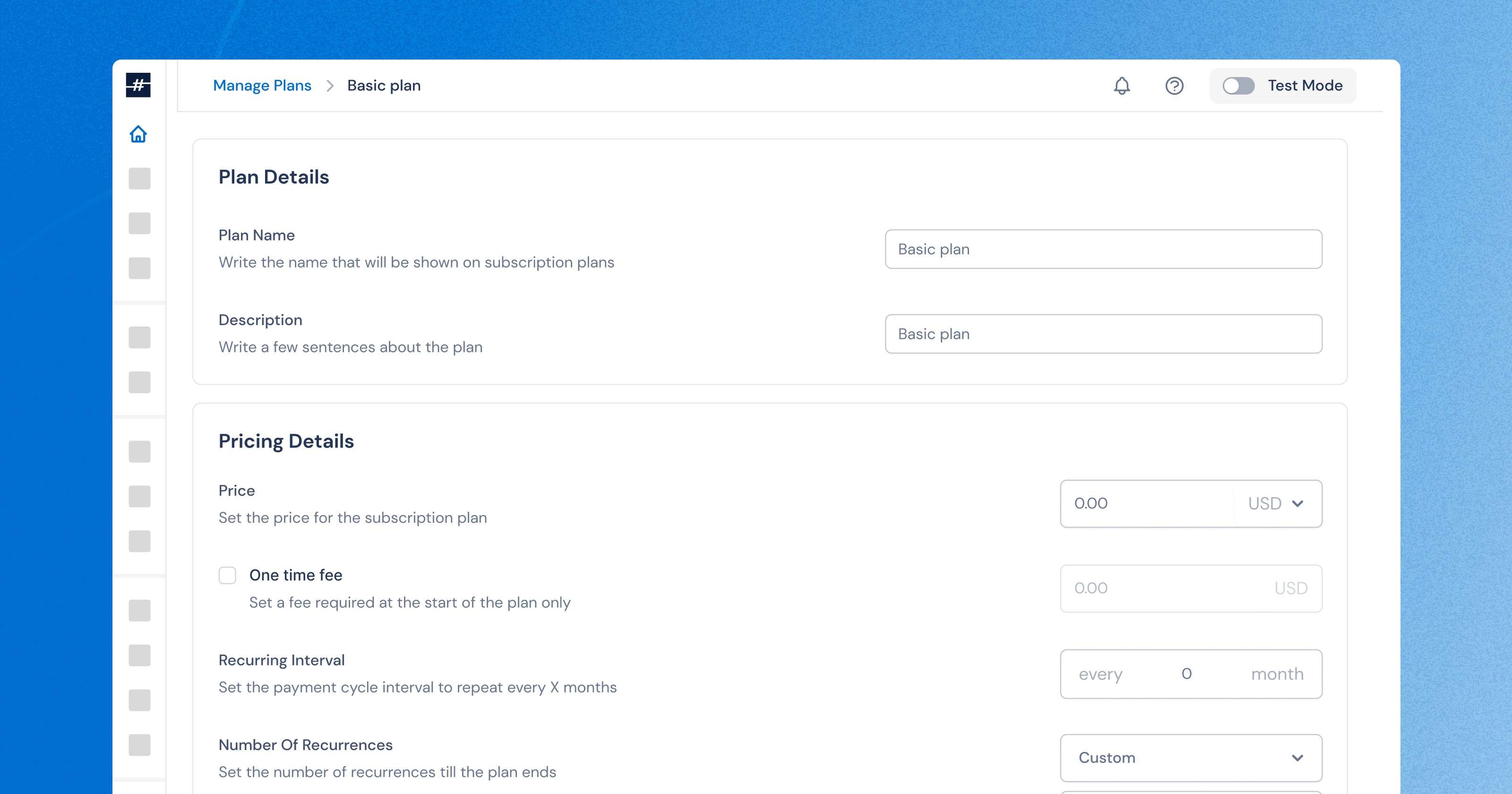
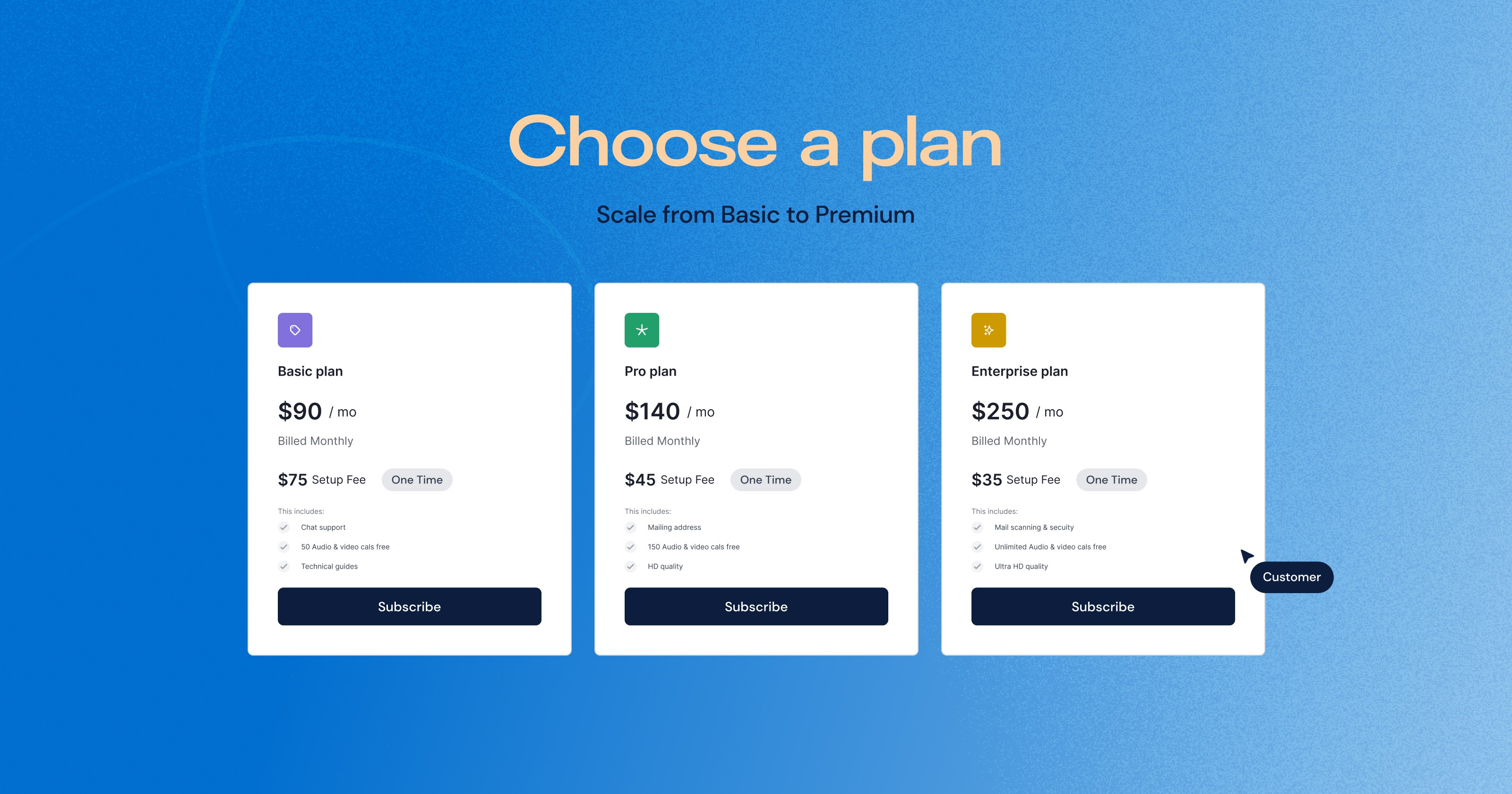
Flexible pricing strategies. Free trials, tiered plans, discounted introductory pricing, and setup fees are all supported without rebuilding payment logic each time. Merchants can test and adjust pricing models as the business evolves.
Productized services. Service businesses still running on manual invoicing - consultancies, wellness platforms, education providers - can convert those services into structured subscription offerings and move from chasing payments to collecting them automatically.
Global-ready infrastructure. The subscription system integrates directly with MoneyHash's orchestration layer, so recurring payments benefit from intelligent retry logic, local payment integrations, and flexible authentication across markets with varying payment infrastructure.
Choosing the Right Subscription Model for Your Industry
Not every subscription model fits every business, and picking the wrong structure can hurt both conversion and retention. Here's a practical breakdown by industry:
SaaS and B2B platforms almost always benefit from tiered monthly and annual plans, with annual discounts as an incentive for longer commitments. The auto-charge model works well here since most B2B customers pay by card. If you have enterprise clients who prefer invoiced billing on net terms, the invoice-based mode handles that without requiring a separate billing system.
Digital media and streaming services tend to convert best with a free trial that rolls into a monthly plan. The key is a seamless trial-to-paid transition - no manual action required from the customer. MoneyHash handles this automatically: the trial period runs, the first invoice is generated at the end of it, and the payment is collected. If the customer's payment method is saved, it happens without any interruption to their experience.
Education and coaching platforms often have irregular demand - students may want to pause during exam periods or between cohorts. The pause and resume controls in MoneyHash are well-suited for this. Rather than losing a subscriber who needs a break, you give them a way to step back without cancelling entirely. That flexibility can make a measurable difference in long-term retention.
E-commerce and membership businesses can use subscriptions beyond the obvious membership fee model. Installment plans - splitting a large purchase into three or six monthly payments - can be structured as fixed-term subscriptions. Each installment generates an invoice, the payment is collected automatically, and the subscription ends at the last cycle. No custom engineering needed. And for merchants who want to offer BNPL as a payment option at checkout, MoneyHash's BNPL connections plug directly into the same stack, so customers get flexible payment options upfront.
Fintech and BNPL platforms operating in markets where credit access is limited can use the invoice-based billing mode to offer recurring payment structures that don't rely on saved card credentials. Combined with APM integrations through MoneyHash for mobile wallets and bank transfers, this opens up subscription-style products to customer segments that traditional billing infrastructure simply can't reach.
What This Looks Like at Scale
MoneyHash's subscription infrastructure is built to handle growth without requiring your operations team to grow alongside it. Whether you're managing a few hundred subscribers or scaling into the hundreds of thousands across multiple markets, the billing logic, routing, and failure recovery work the same way. You're not rebuilding as you grow.
The no-code dashboard means your operations and finance teams can create and adjust plans, review subscription statuses, and manage lifecycle actions without pulling engineering resources every time a pricing change needs to go live. And for teams that do want deeper programmatic control, the API and webhooks support full custom integration.
Businesses using MoneyHash report a meaningful reduction in manual billing workload - in some cases cutting subscription management overhead by more than two thirds - alongside improvements in authorization rates from the underlying routing engine.
If you want to see it for yourself - book a demo and we'll walk you through how the subscription feature fits your specific use case and market. After the demo, you can get sandbox access to test it yourself - build plans, run through the billing cycle, and see how the system handles payment collection before you go live.
Visit www.moneyhash.io to get started.



Author:
MoneyHash
Writer